






01 · Where to go
Tanzania is four separate safari countries wearing one flag, and they suit different trips and different months.
The northern circuit is what most people mean by a Tanzanian safari: Tarangire, Manyara, Ngorongoro and the Serengeti, all within a day of Arusha. The southern parks — Ruaha and Nyerere — are bigger, emptier and reached by air. The west is chimpanzee country. The coast is where trips end.
02 · Where to go
Sixteen places, by region
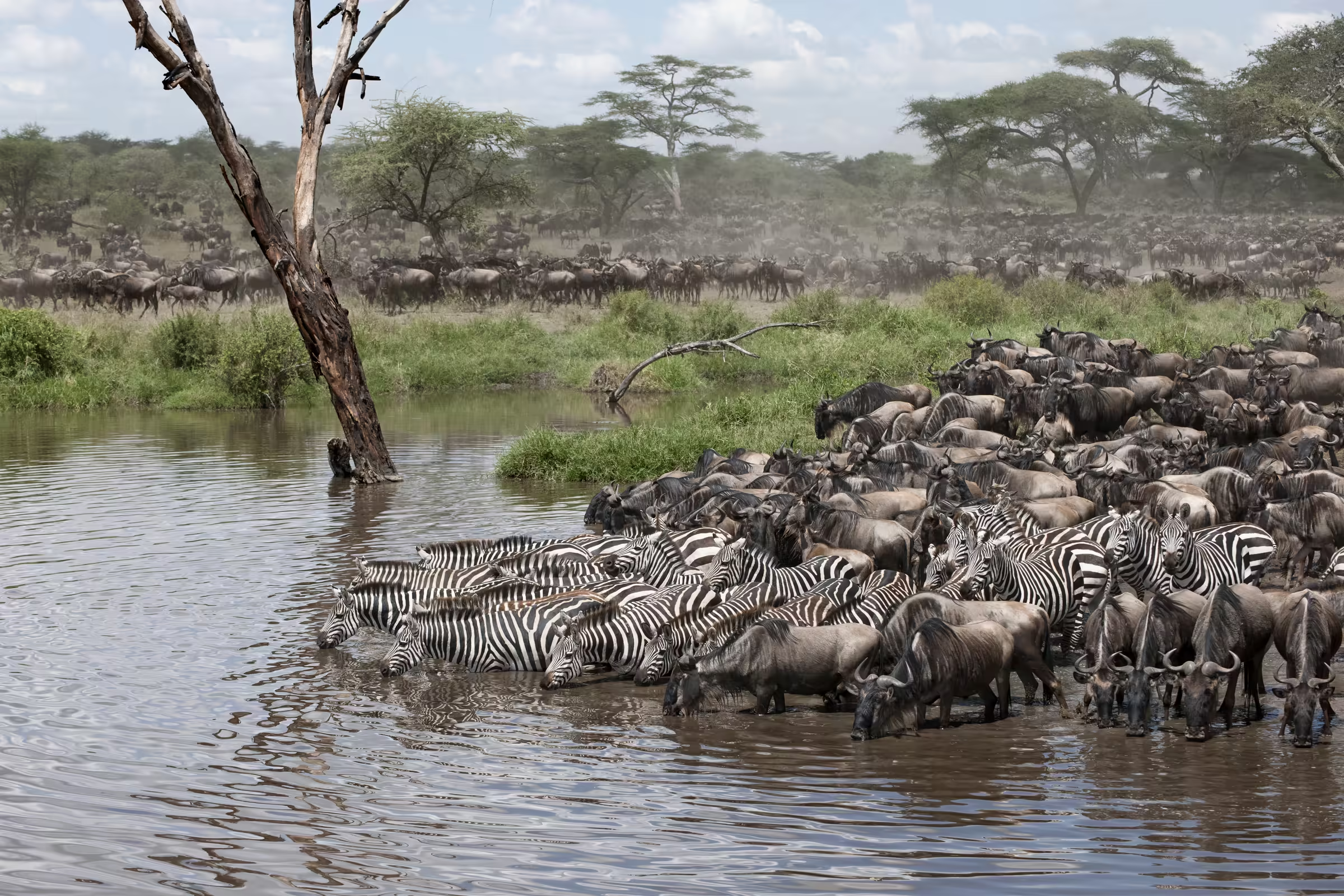
Serengeti National Park
The migration, and four different regions depending on the month.
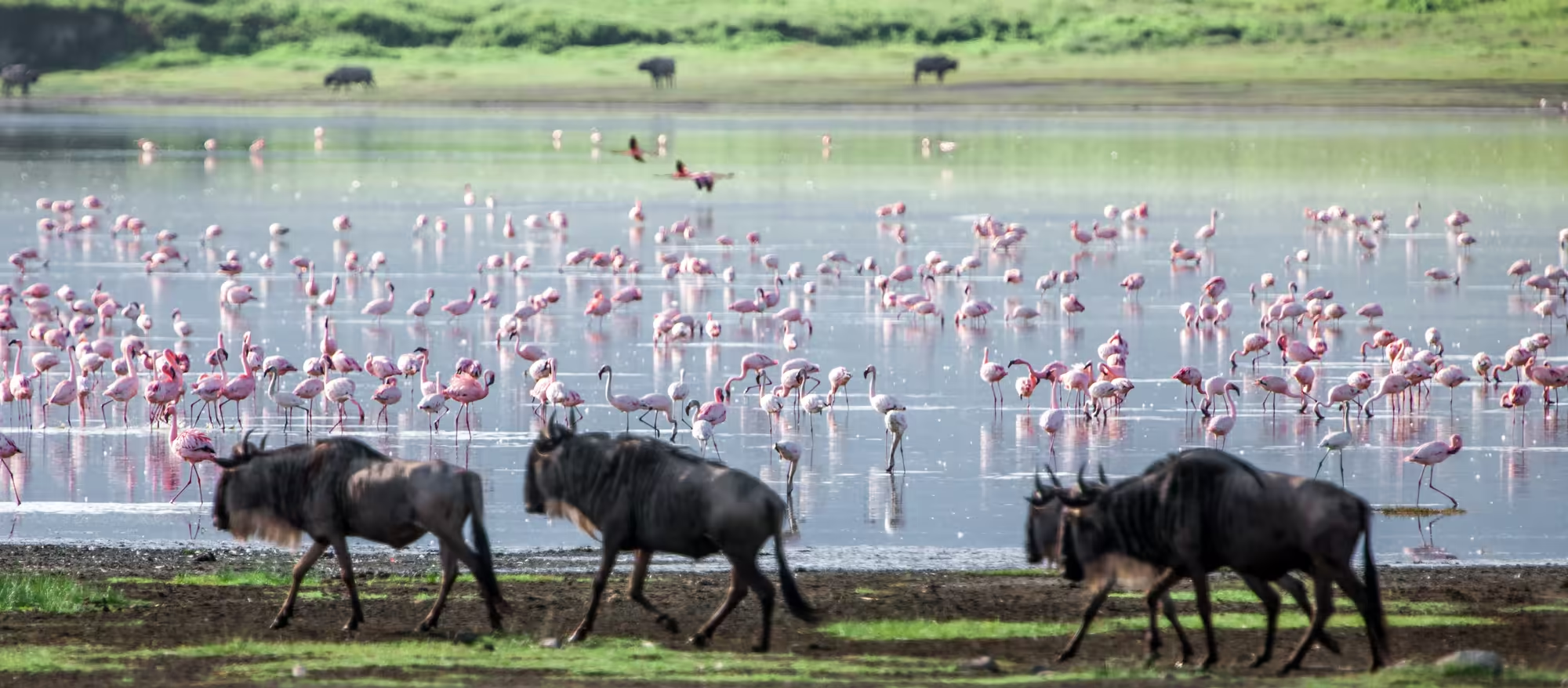
Ngorongoro Crater
A collapsed volcano with a resident population, including black rhino.

Tarangire National Park
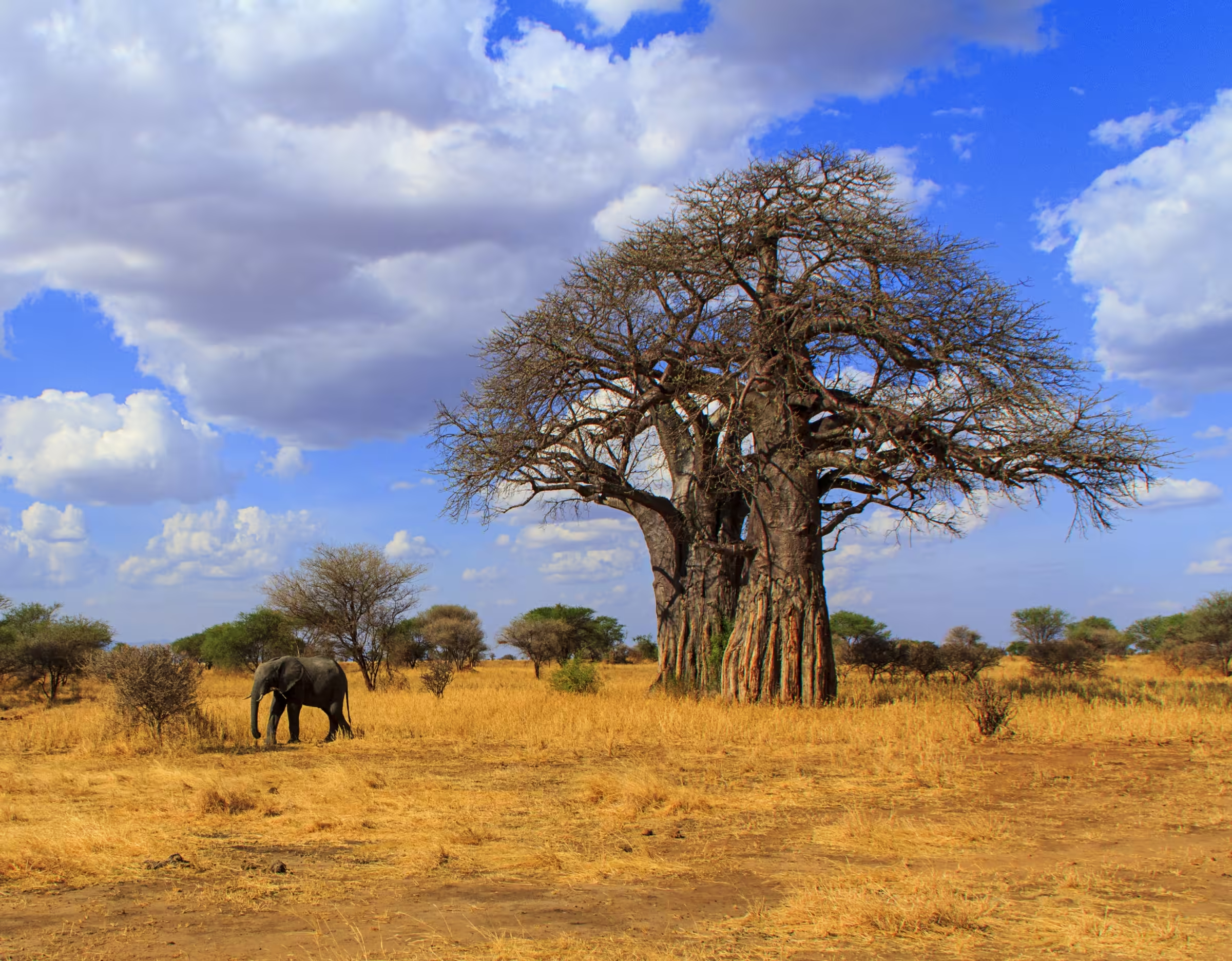
Baobabs and the densest elephant concentrations of the circuit.
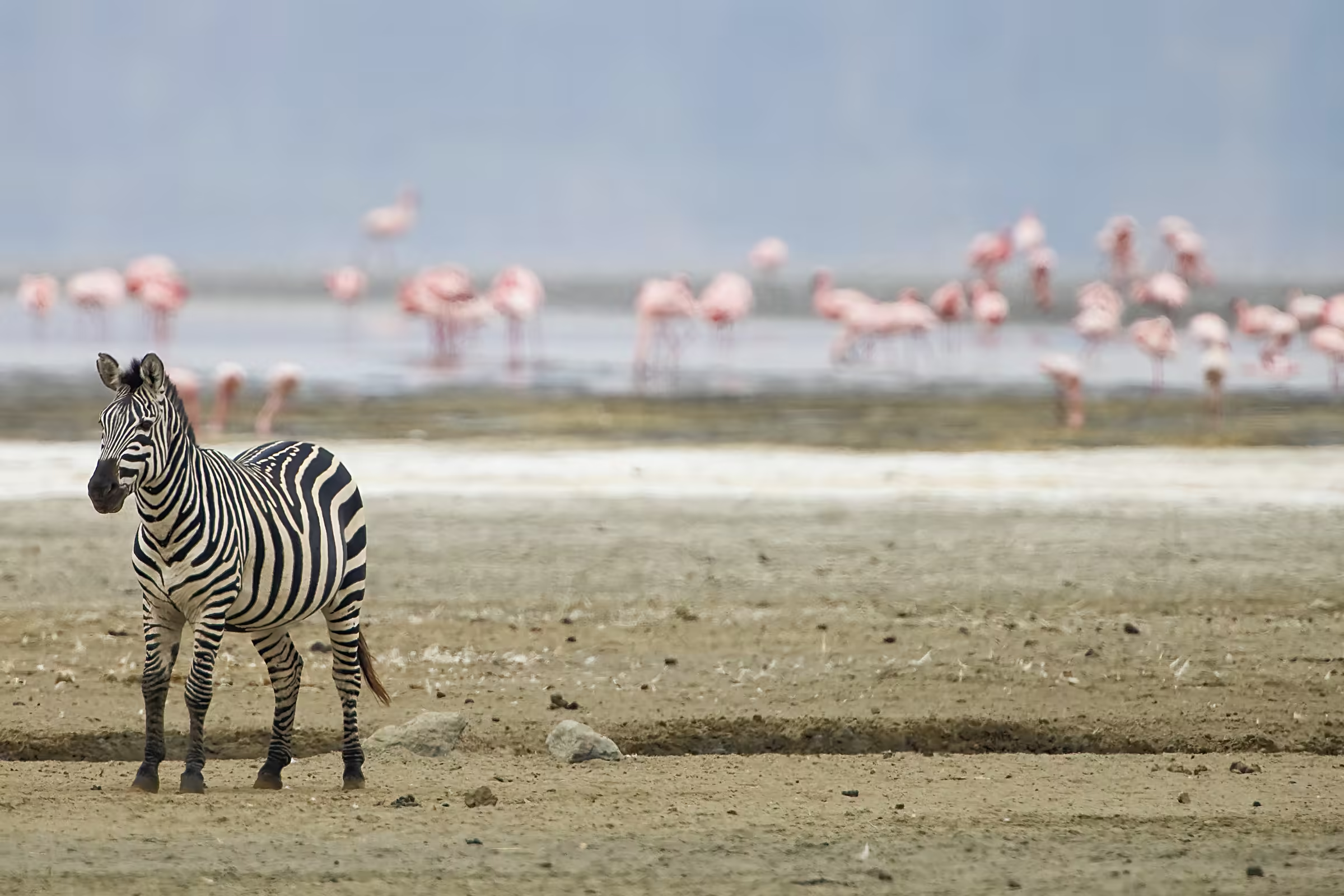
Lake Manyara
Groundwater forest under the Rift wall, and a lot of birds.

Ndutu & the Southern Plains
Calving season, and the predators that follow it.
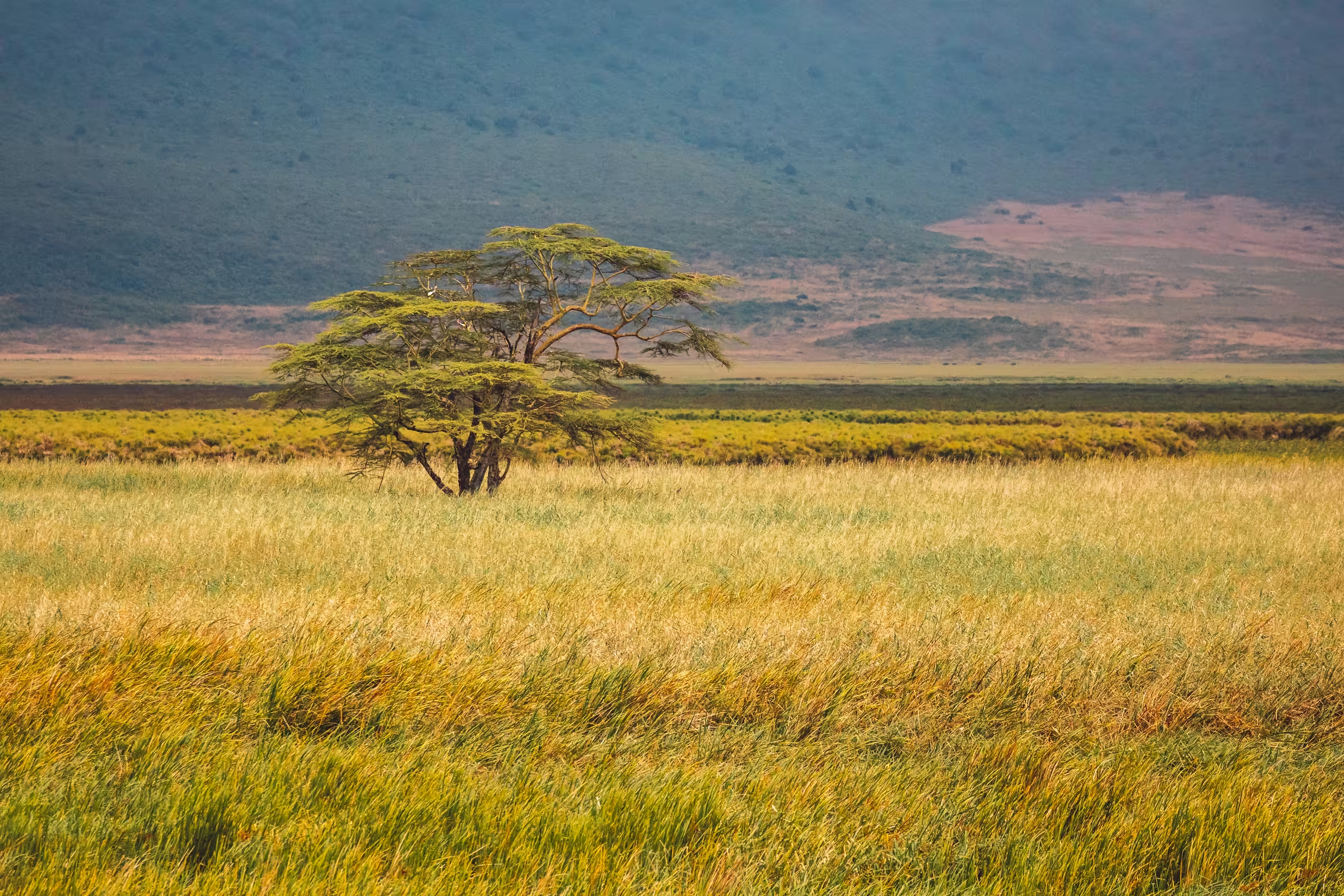
Lake Eyasi
Hadzabe and Datoga communities, visited properly or not at all.

Arusha
Where every northern safari begins, and a park most people skip.

Mount Kilimanjaro
A walk, not a climb — but the days decide whether you summit.

Mahale Mountains
Chimpanzees on a mountain that falls into Lake Tanganyika.
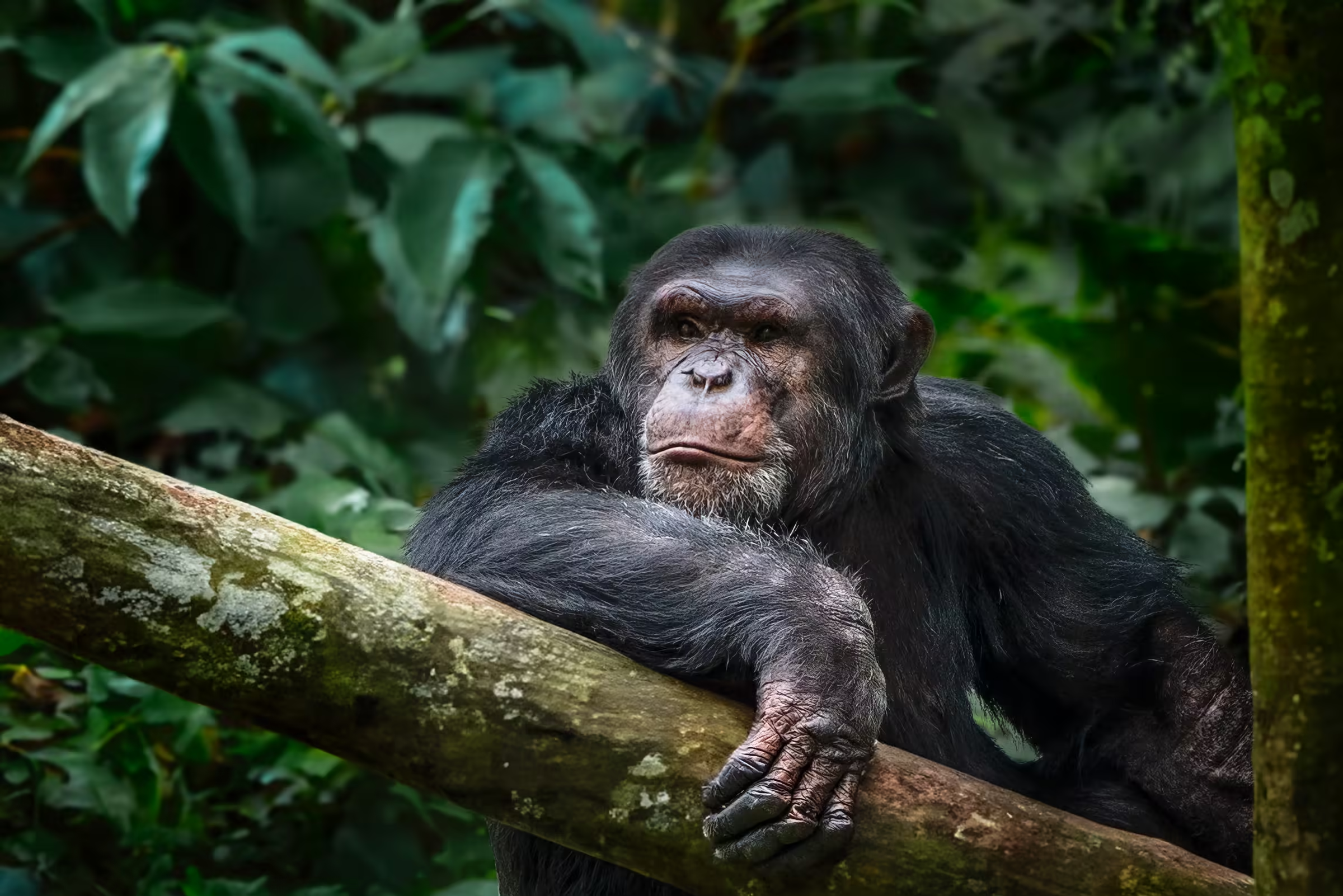
Gombe Stream
The smallest park, and where primate research began.
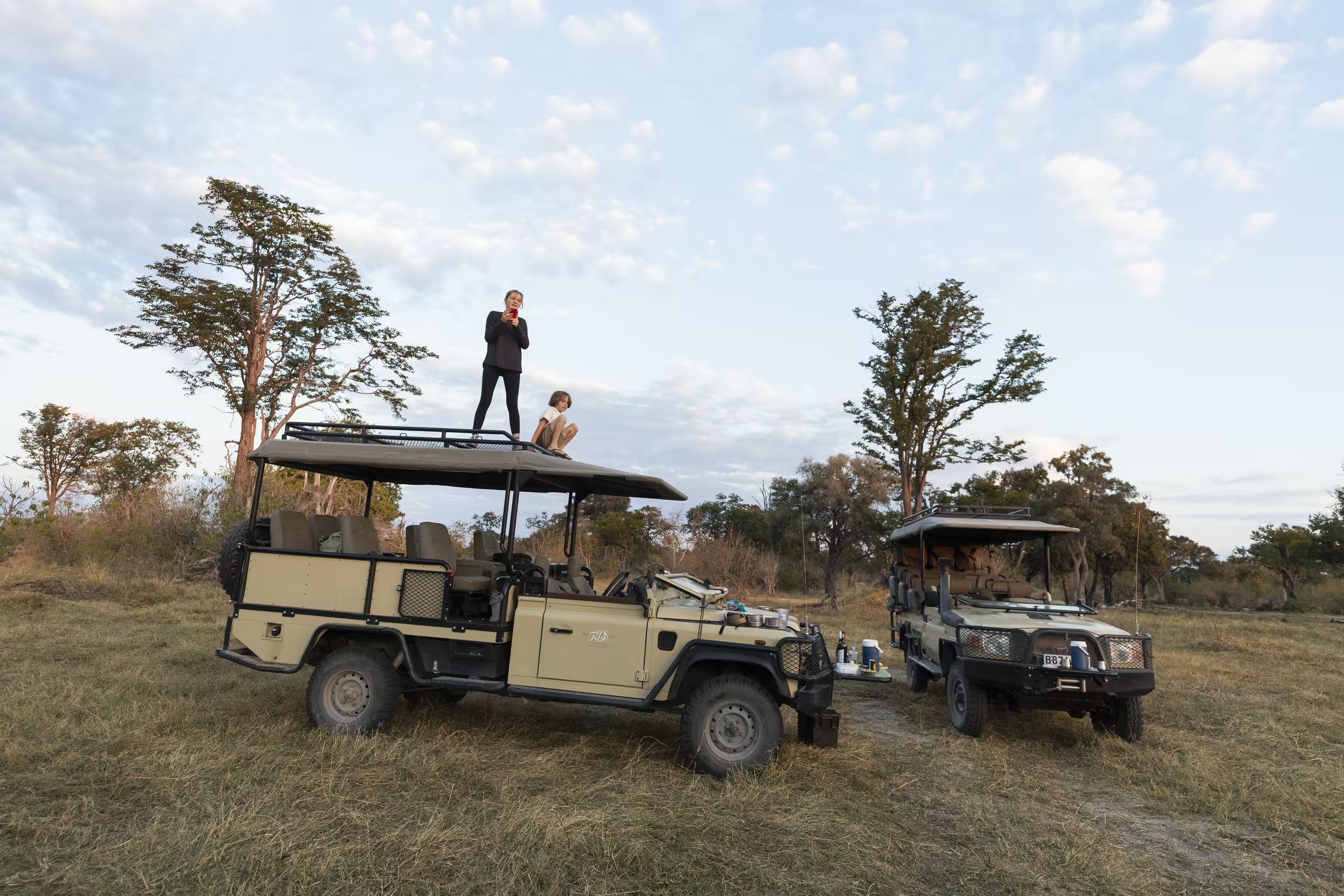
Ruaha National Park
The largest park in the country, and very few vehicles.
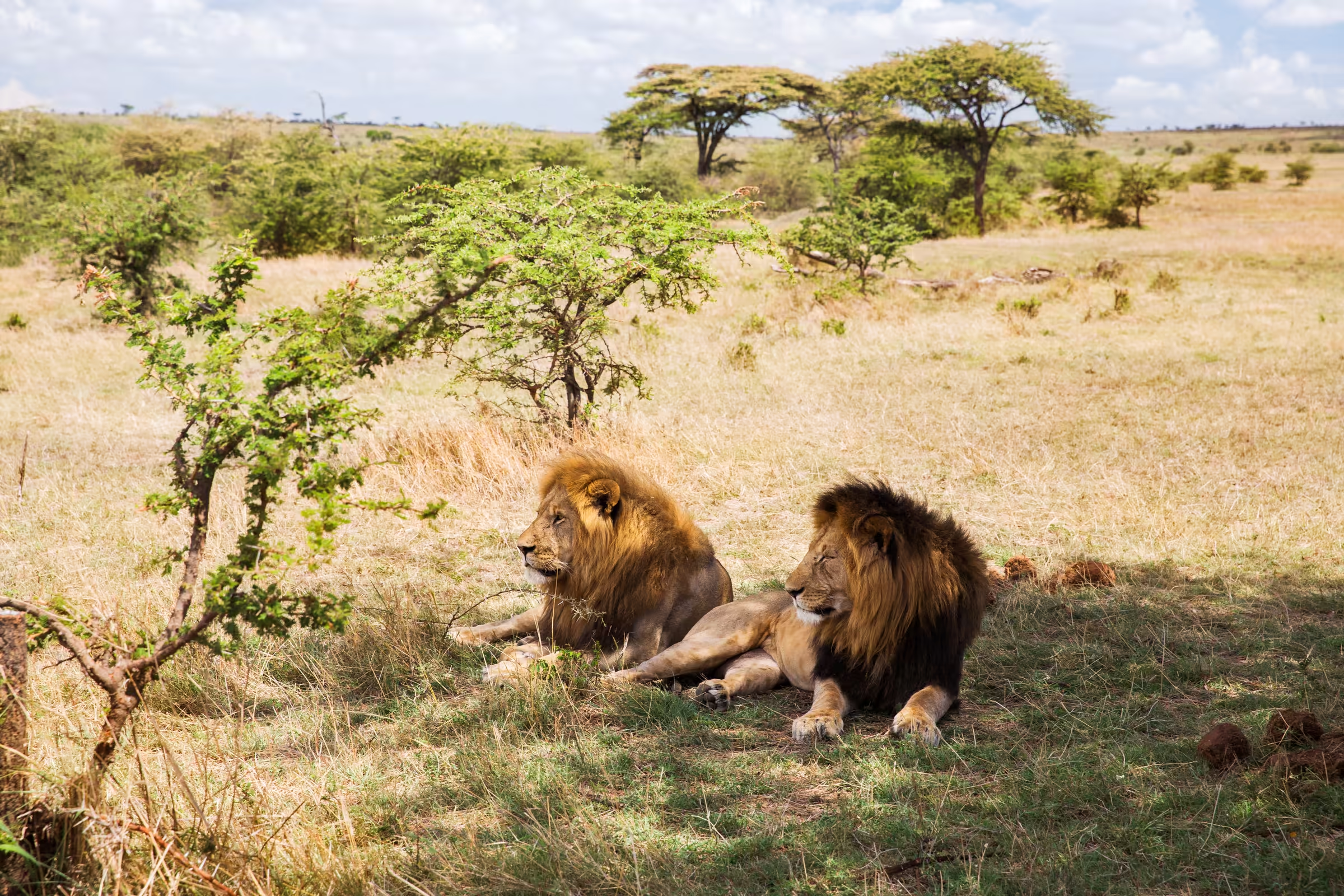
Nyerere (Selous)
Boat safaris and walking on the Rufiji.

Katavi National Park
Buffalo herds in the thousands, and near-total solitude.
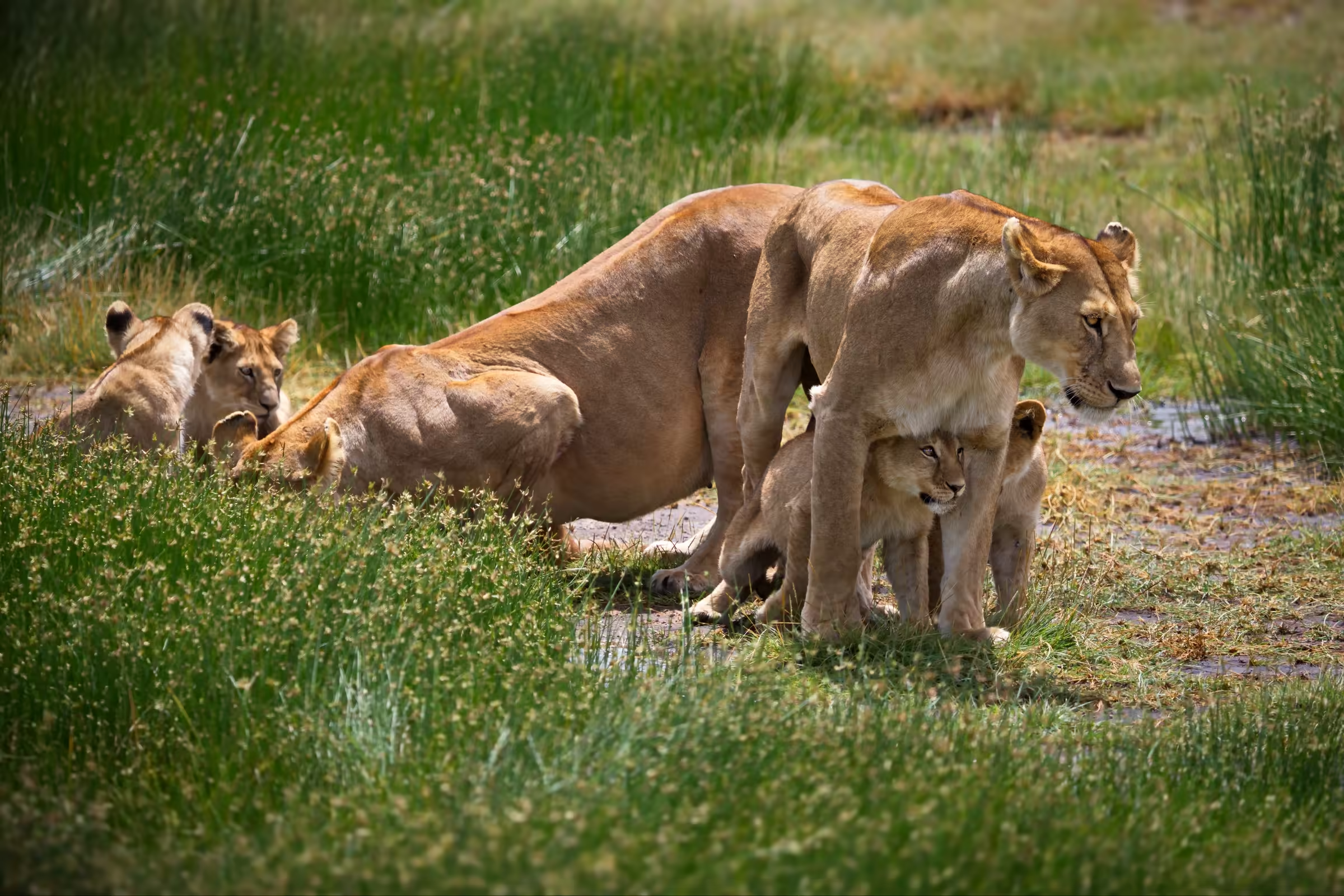
Mikumi National Park
Reachable by road from Dar es Salaam.

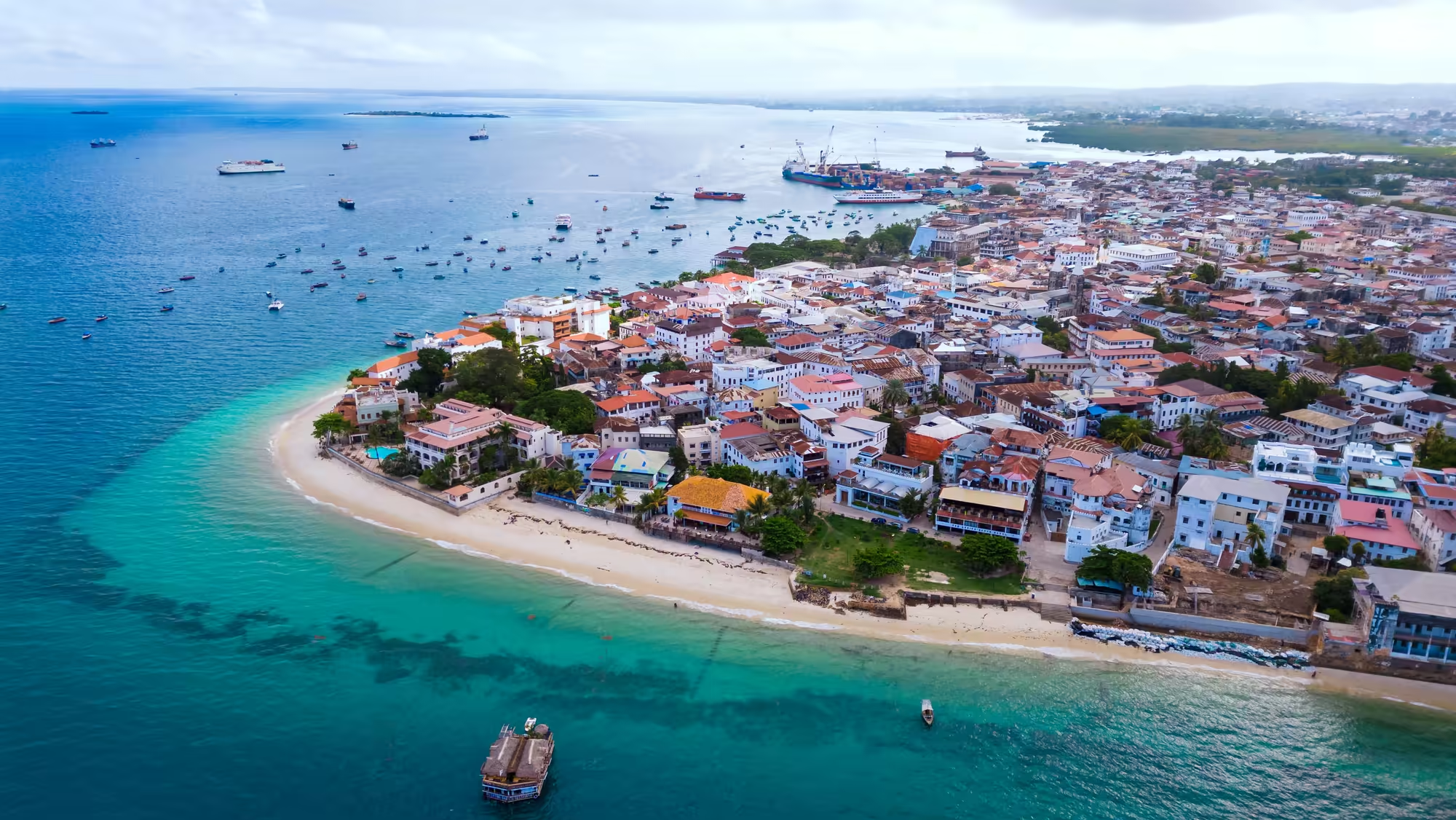
Zanzibar
Stone Town, the reef, and choosing the right coast.
Pemba Island
Quieter than Zanzibar, and the better diving.

01 · Northern circuit
Serengeti National Park
The Serengeti is not one place. It is a system, and where you should sleep in it depends entirely on the month you arrive.
Wildlife
- Wildebeest
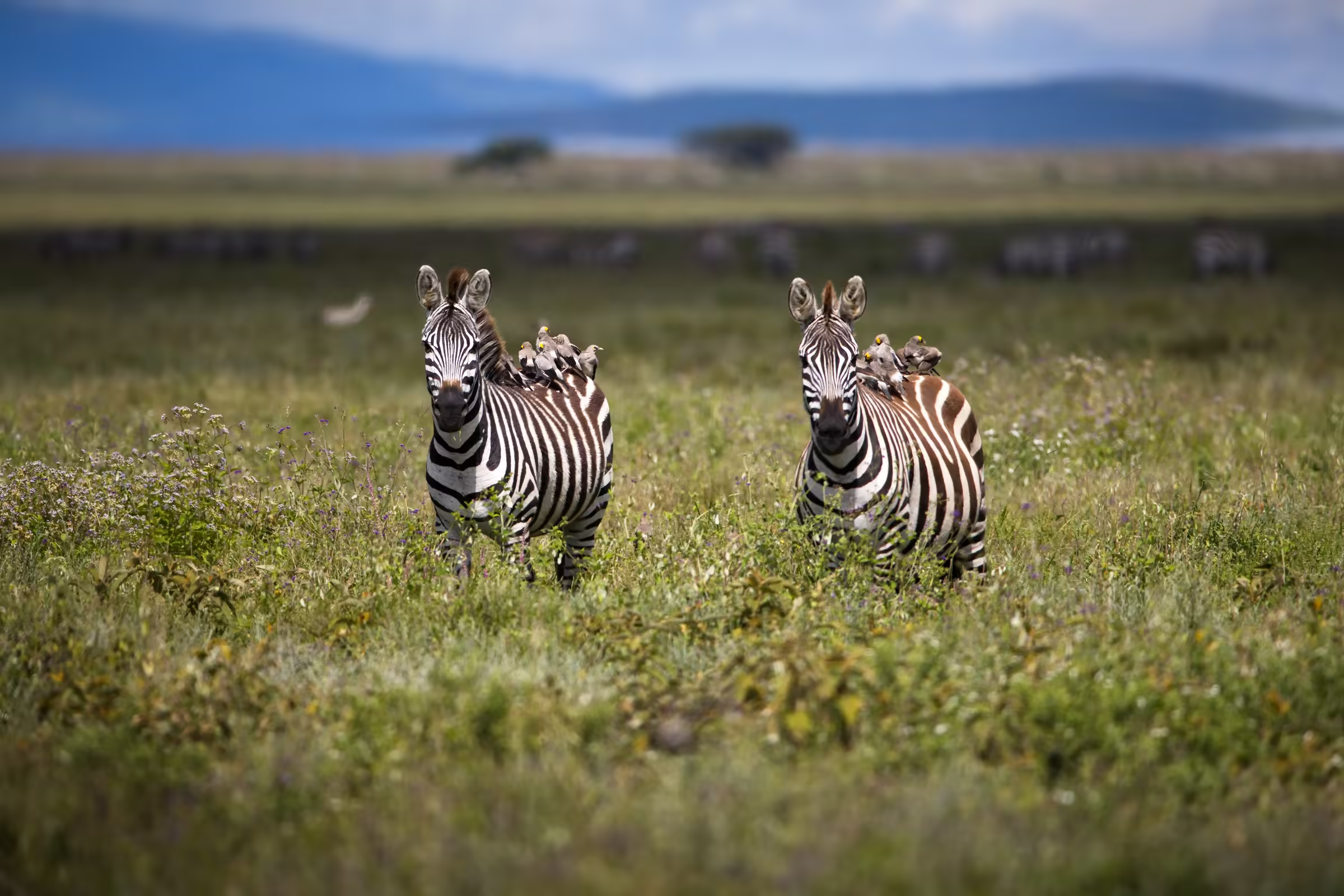
- Zebra
- Lion
- Cheetah
- Leopard
- Hyena
The southern plains and Ndutu
Short-grass country around Ndutu and the Salei plains. This is where the wildebeest calve, over a few concentrated weeks, and where the predator density is at its most extreme. Camps here are seasonal — pitched for these months and struck when the herds move on.
The west and the Grumeti
The herds move north-west through the corridor. April and May are the heavy rains — fewer vehicles, lush country, harder tracks. By June the front of the migration is at the Grumeti River.
The north and the Mara River
Kogatende and the Mara River. This is the season of the crossings, and it is also the driest, easiest driving of the year. It is the busiest and most expensive stretch of the Serengeti calendar.
Central Seronera
The Seronera valley holds water year-round, so it holds resident lion, leopard and cheetah whether or not the migration is anywhere near. It is the safest single choice if your dates are fixed and awkward.
Lodge or permanent tented camp, central Serengeti
A proper room, often with a long view at the end of the day.
Public campsite, central Serengeti
Under canvas at the park’s own campsites, with our cook.
Mobile tented camp, Serengeti
A camp that moves with the season, so the nights stay close to the animals.
The property itself is named in your quote, for your dates.
By road from Arusha through the Ngorongoro highlands, most of a day with game viewing on the way, or by light aircraft to the Serengeti airstrips.
- January to March
- Calving on the southern plains. Exceptional predator action. Short rains have greened everything; the light is good and the crowds are lower than the July peak.
- April and May
- The long rains. Some camps close. Prices are at their lowest and you may have a sighting entirely to yourself. Expect wet afternoons.
- June
- The plains dry out, the herds push west and north. A good compromise month — thinner crowds than July, better roads than May.

02 · Northern circuit
Ngorongoro Crater
Twenty kilometres wide, six hundred metres deep, and full of animals that have no particular reason to leave.
Wildlife
- Black rhino
- Lion
- Buffalo
- Elephant
- Hyena
- Flamingo
Down before the light gets hard
The descent road opens early. Being on the floor at first light is worth the cold start — it is when the predators are still moving and before the day’s vehicles arrive.
Grassland, a soda lake and a fever-tree forest
Lake Magadi holds flamingo in numbers that vary with the water. The Lerai forest holds elephant — often old bulls with heavy ivory. Between them, open grass with lion, hyena and the rhino.
Where you sleep, and why it matters
Rim accommodation puts the descent minutes away rather than an hour. It is cold at 2,300 metres — fires are lit and blankets are on the beds.
Lodge on the Ngorongoro highlands rim or in Karatu
Chosen for your month and your budget.
Public campsite, Karatu
Under canvas at the park’s own campsites, with our cook.
Public campsite, Ngorongoro Crater rim
Under canvas at the park’s own campsites, with our cook.
The property itself is named in your quote, for your dates.
About three hours by road from Arusha to the crater rim. Vehicles go down to the floor early and come back up in the afternoon.
- How long do you need?
- One full descent is enough for most people. The crater floor is finite and vehicles are capped at six hours below the rim.
- Is it crowded?
- At a good sighting in high season, yes. Going down at opening and coming up for lunch avoids most of it.
- What does it cost?
- Conservation Area fees plus a per-vehicle crater service fee, charged per descent. Both are government-set and both change — To confirm for current rates.
03 · Northern circuit
Tarangire National Park
In the dry months the Tarangire River is the only water for a long way, and everything comes to it.
Wildlife
- Elephant
- Buffalo
- Lion
- Giraffe
- Zebra
- Wildebeest
North, along the Tarangire
Where most of the beds and most of the day visitors are. In dry months the riverbed itself becomes the sighting — elephant digging for water, and everything else waiting its turn.
South, to Silale and Gursi
A long drive from the gate and worth a night rather than a day trip. Buffalo herds, resident lion and far fewer vehicles.
Lodge or tented camp near Tarangire
A proper room, often with a long view at the end of the day.
The property itself is named in your quote, for your dates.
About two hours by road from Arusha, usually the first park on a northern route.
- July to October
- The park at its best. Animals concentrate on the river; the elephant numbers are the reason people come.
- November to May
- Rain spreads the water and the animals disperse. The park is green and beautiful and much emptier of game — and of visitors.
- How many nights?
- One if you are passing through. Two if you want the south, which most itineraries never reach.

04 · Northern circuit
Lake Manyara
Small, green, and unlike anything else you will drive through that week.
Wildlife
- Flamingo
- Baboon
- Elephant
- Hippo
- Lion
- Blue monkey
Groundwater forest at the gate
Tall, closed canopy fed from below rather than by rain. Blue monkey, baboon troops of a hundred or more, silvery-cheeked hornbill.
Floodplain and soda water
Flamingo, pelican and storks when the water is right. The lake shrinks and swells dramatically between seasons.
The Rift escarpment behind it
Six hundred metres of it, immediately to the west, which is what makes the light here so good in the late afternoon.
Lodge near Lake Manyara or Mto wa Mbu
Chosen for your month and your budget.
The property itself is named in your quote, for your dates.
About two hours by road from Arusha, at the foot of the Rift wall on the way to the crater.
- Dry season, July to October
- Best for game concentrated near water and for easy driving.
- Wet season, November to May
- Best for birds — migrants arrive, and the lake fills. Some tracks flood.
- Half day or full day?
- A half day covers the forest and the northern floodplain. A full day gets you south to the hot springs at Maji Moto.

05 · Northern circuit
Ndutu & the Southern Plains
For a few weeks each year this is the densest concentration of newborn prey and hungry predators in Africa.
Wildlife
- Wildebeest
- Zebra
- Lion
- Cheetah
- Hyena
The herds arrive
Following the short rains south. Numbers build through the month.
Calving
The peak. Thousands born daily at the height of it, and cheetah, lion and hyena operating in the open.
Still here, starting to move
Calves are stronger and the herds begin drifting north-west as the plains dry.
Mobile or seasonal tented camp, Ndutu
A camp that moves with the season, so the nights stay close to the animals.
The property itself is named in your quote, for your dates.
On the Serengeti’s southern edge, inside the Ngorongoro Conservation Area: by road through the highlands, or by light aircraft to the Ndutu airstrip.
- Where do you sleep?
- Seasonal mobile camps, pitched for these months and struck when the herds leave. Which camp — To confirm.
- Why not just stay in central Serengeti?
- Because it is a two-to-four hour drive each way, which costs you the light at both ends of the day.
- Can you drive off-road?
- Off-road driving rules differ between the park and the conservation area side, which is one practical reason Ndutu is popular with photographers.
06 · Northern circuit
Lake Eyasi
This is a cultural stop, and the honest version of it is early, quiet and unstaged.
What you see
- Hadzabe
- Datoga
- Baobabs
- The soda lake
Out with a hunting party
On foot, fast, and not choreographed. You will cover ground and you may come back with nothing, which is the point.
The Datoga forge
Arrowheads and jewellery worked from scrap metal, using techniques that have not changed much.
Birds and onion fields
The lake shrinks and swells hugely between seasons; in the wet it draws flamingo and pelican.
Lodge or tented camp near Lake Eyasi
A proper room, often with a long view at the end of the day.
The property itself is named in your quote, for your dates.
About two hours by road from Karatu, down into the Rift floor.
- Is this exploitative?
- It can be. Ask who receives the fee, whether the visit is arranged with the community directly, and whether the schedule fits their day rather than yours.
- Should I photograph people?
- Ask first, every time, and accept no. Payment arrangements should be settled by your guide beforehand, not negotiated in front of a camera.
- When to go?
- Dry season for the roads. The lake itself is more interesting after rain.

07 · Northern circuit
Arusha
Almost every northern-circuit safari starts and ends here, usually with one night at each end that nobody plans properly.
What you see
- Mount Meru
- Arusha National Park
- Coffee farms
- The market
Walk, canoe, and see colobus
Guided walking is permitted with an armed ranger, and canoeing on the Momella lakes gets you level with hippo and waterbirds. A half day here beats a half day in a hotel garden.
4,562 metres, and a serious walk in its own right
Three or four days, far quieter than Kilimanjaro, and often used as acclimatisation before it. The crater rim walk is genuinely exposed.
Markets, coffee and the cultural heritage centre
A working East African city rather than a resort. The coffee grown on Meru’s slopes is worth an hour of anyone’s time.
Hotel in Arusha or Moshi
Chosen for your month and your budget.
Hotel in Arusha with a pool
Chosen for your month and your budget.
Hotel in Moshi or Arusha
Chosen for your month and your budget.
The property itself is named in your quote, for your dates.
About an hour by road from Kilimanjaro International Airport.
- Which airport?
- Kilimanjaro International (JRO) for almost all safari arrivals. Arusha Airport is the small strip used for light-aircraft transfers into the parks.
- How long from JRO to town?
- About an hour, depending on traffic through Usa River.
- Should I sleep in Arusha or Moshi?
- Arusha for a safari, Moshi if you are climbing Kilimanjaro — it is closer to the gates.

08 · Mountains
Mount Kilimanjaro
Nobody needs technical skill to reach Uhuru Peak. What people need is days, and most failed attempts are attempts that were too short.
What you climb through
- Rainforest
- Heath and moorland
- Alpine desert
- Glaciers
- Uhuru Peak 5,895 m
The popular one, six to seven days
Steep in places, scenic throughout, and busy. The classic “climb high, sleep low” profile on day four helps acclimatisation. Camping only.
The best acclimatisation, seven to nine days
Starts west, crosses the Shira Plateau, joins the Machame route later. The extra days are the point — this is the route with the strongest summit rates.
Huts, five to six days
The only route with dormitory huts. Often chosen for that reason and for price, and it has the weakest success rate because it is short and its ascent profile is unhelpful.
The long way round, nine days
Circles the northern slopes, the quietest route on the mountain and the most days above 3,000 metres. The strongest option if you have the time.
Chosen for your trip
Lodges and tented camps in and around the park, picked for your month and your budget.
The property itself is named in your quote, for your dates.
Moshi and the route gates are about an hour by road from Kilimanjaro International Airport.
- What does altitude sickness feel like?
- Headache, nausea, poor sleep and no appetite. Mild symptoms are normal and manageable. What is not normal is confusion, breathlessness at rest or a cough — those mean descend, immediately.
- Does fitness decide it?
- Less than people expect. Fit young men fail more often than they should because they walk too fast. The guides say “pole pole” constantly for a reason.
- How cold is summit night?
- Below freezing, often well below, with wind. You leave camp around midnight and reach the crater rim near dawn.
09 · South & west
Mahale Mountains
Forested mountains dropping into the second-deepest lake in the world, with no road in.
Wildlife
- Chimpanzee
- Red colobus
- Blue monkey
- Bushbuck
Uphill, in forest, for as long as it takes
Trackers go ahead at dawn. You follow when they radio a location, which may be twenty minutes away or three hours. Reasonable fitness is genuinely required.
One hour with the group, then out
Time with the chimpanzees is capped and masks are worn — they share enough of our biology to catch what we carry.
Afternoons on Tanganyika
Swimming, kayaking and snorkelling over cichlids in water that is startlingly clear.
Beach camp on Lake Tanganyika, Mahale
Chosen for your month and your budget.
The property itself is named in your quote, for your dates.
By light aircraft, on fixed days, then by boat along Lake Tanganyika. There are no roads.
- When can you go?
- Roughly May to October is the dry season and the standard window. Trekking is harder and camps often closed in the heavy rains.
- How do you get there?
- Charter or scheduled light aircraft, then a boat transfer along the shore. It is a full travel day from Arusha.
- How fit do I need to be?
- Fit enough for several hours of steep, humid walking without a path, at short notice.

10 · South & west
Gombe Stream
Fifty-six square kilometres of steep forested valleys above Lake Tanganyika, and the birthplace of long-term chimpanzee research.
Wildlife
- Chimpanzee
- Olive baboon
- Red colobus
- Blue monkey
By boat from Kigoma
There is no road. Kigoma is reached by air or by the long train from Dar es Salaam, and the park is a boat ride up the shore from there.
Steep valleys, humid forest
Shorter distances than Mahale but consistently steep. Early starts.
A living research station
Kasekela valley, the feeding station site and the research buildings are part of what you see.
Guest house or tented camp, Gombe
Simple rooms at the park.
The property itself is named in your quote, for your dates.
A domestic flight to Kigoma, then a boat up the lake shore.
- Best time?
- Dry season, roughly May to October, for easier paths.
- How long?
- Two or three nights. Combining Gombe and Mahale in one trip is common and makes the flights worth it.
- Permits?
- Park fees plus a chimpanzee permit, government-set — To confirm for current rates.
11 · South & west
Ruaha National Park
The largest national park in Tanzania, and on most days you will not see another vehicle at a sighting.
Wildlife
- Elephant
- Lion
- Wild dog
- Greater kudu
- Leopard
- Buffalo
The Great Ruaha in the dry season
By September the river is a series of pools and sand, and the game concentrates on it absolutely. Elephant dig for water in the bed; lion and hyena work the banks.
Woodland, and what lives in it
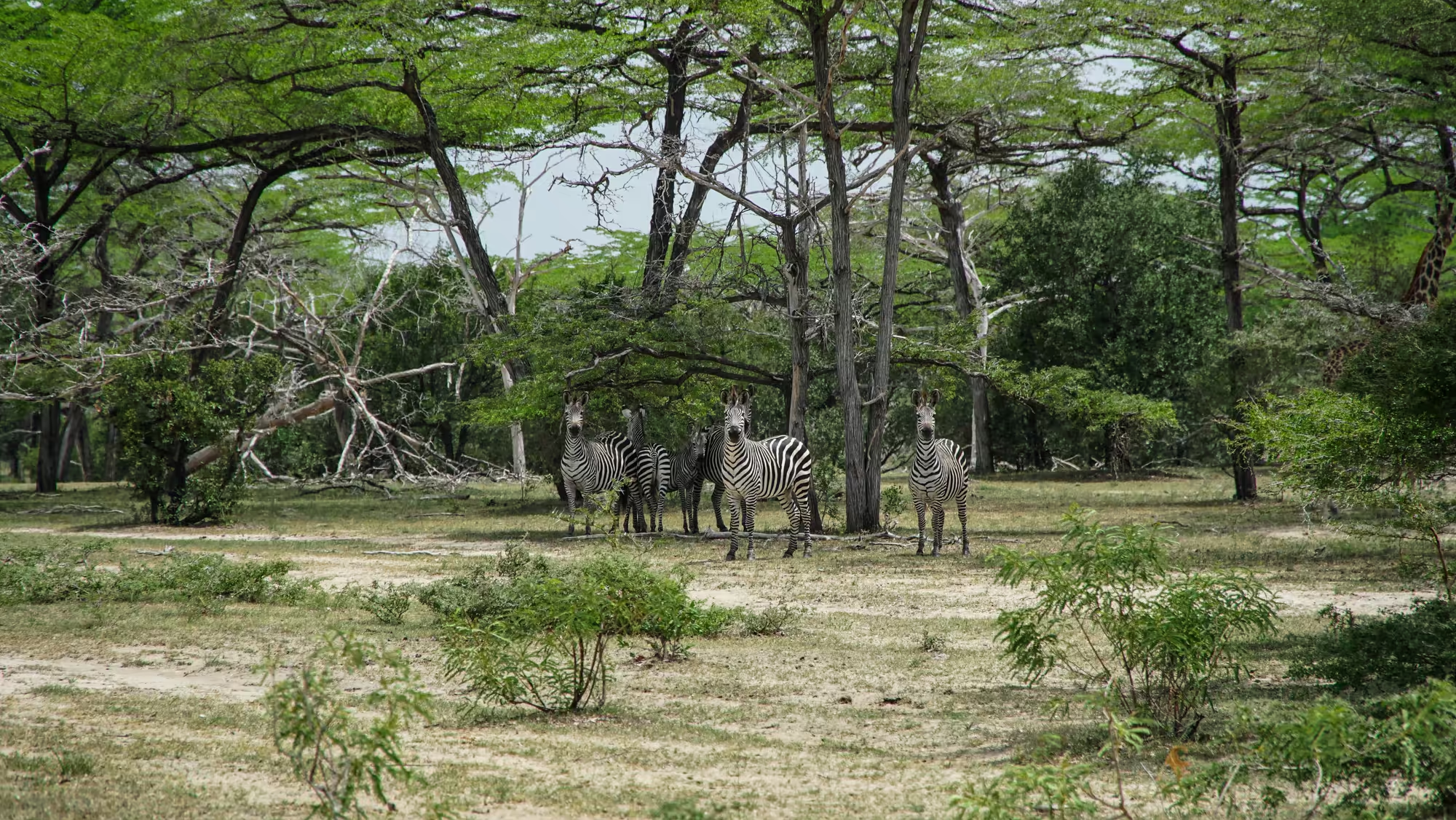
Away from the river the park is miombo woodland — sable, roan and Lichtenstein’s hartebeest, none of them common on the northern circuit.
Large prides, and wild dog
Ruaha’s lion prides run large. African wild dog are present and denning is sometimes seen between June and August.
Tented camp or lodge, Ruaha
Canvas walls, a real bed and the sound of the park at night.
The property itself is named in your quote, for your dates.
By light aircraft from Dar es Salaam or Arusha.
- June to October
- The dry season, and the reason to come. Game concentrates on the river and the roads are straightforward.
- November to April
- Green, hot and quiet. Some camps close entirely from March to May.
- How do I get there?
- Scheduled light aircraft from Dar es Salaam or from Nyerere, usually combined into one southern trip.
12 · South & west
Nyerere (Selous)
The Rufiji River and its lake system make this the only major Tanzanian park where a boat is a serious way to see game.
Wildlife
- Wild dog
- Elephant
- Hippo
- Crocodile
- Lion
- Buffalo
The Rufiji and the lakes
Hippo and crocodile at eye level, elephant coming down to drink, and skimmers working the sandbars. Sunset on the river is the signature experience of the park.
Walking safari with an armed ranger
Permitted here in a way it is not in the Serengeti. Tracks, dung, termite mounds — the small scale you cannot get from a vehicle.
Game drives through miombo and open floodplain
Wild dog are a genuine possibility here; the population is one of Africa’s most significant.
Tented camp beside the Rufiji, Nyerere
Chosen for your month and your budget.
The property itself is named in your quote, for your dates.
By light aircraft from Dar es Salaam or Zanzibar, or by road from Dar es Salaam.
- June to October
- Dry, game concentrated on the water, most camps open.
- November to February
- Green and hot, with good birding as migrants arrive.
- March to May
- Heavy rain. Most camps close.
13 · South & west
Katavi National Park
Remote enough that the visitor numbers are counted in hundreds a year rather than hundreds of thousands.
Wildlife
- Buffalo
- Hippo
- Crocodile
- Lion
- Elephant
Katisunga and Chada
Open grass with tree lines at the edges. Buffalo and elephant move across it in numbers that are difficult to photograph because they do not fit in a frame.
Hippo, compressed
As the rivers shrink, hippo crowd into what is left. By October it is crowded, tense and extremely noisy.
Few, small, seasonal
A handful of camps serve the park and most close in the wet season.
Chosen for your trip
Lodges and tented camps in and around the park, picked for your month and your budget.
The property itself is named in your quote, for your dates.
By light aircraft. It is one of the most remote parks in the country.
- When?
- June to October. Outside that, access is difficult and most camps close.
- How do you get there?
- Light aircraft, usually on a circuit with Mahale.
- How many nights?
- Three, given the cost of getting there.
14 · South & west
Mikumi National Park
Four hours from Dar es Salaam by road, which makes it the practical choice for a short trip or an add-on.
Wildlife
- Elephant
- Zebra
- Giraffe
- Lion
- Buffalo
- Hippo
A road trip rather than a flight
Reachable by vehicle from Dar es Salaam, which removes the cost and schedule of a charter.
Two nights that actually work
For people with limited time or budget, this is a real safari without internal flights.
With Nyerere or Udzungwa
The Udzungwa Mountains, next door, are a walking and endemic-primate destination rather than a game-drive one.
Lodge or tented camp near Mikumi
A proper room, often with a long view at the end of the day.
The property itself is named in your quote, for your dates.
By road from Dar es Salaam, about five hours.
- Best time?
- June to October for concentrated game; the green season is good for birds.
- How long is the drive?
- Roughly four to five hours from Dar es Salaam.
- Is the highway a problem?
- It runs through the park and carries heavy trucks. Wildlife crossings are a known hazard and speed limits apply.
15 · Coast & islands
Zanzibar
Two very different holidays share one island: the old trading town, and the reef coast.
What you see
- Stone Town
- The reef
- Spice farms
- Dhows
- Beaches
Paje, Jambiani, Michamvi
Reef offshore, extraordinary tides — at low water the sea withdraws several hundred metres and the seaweed farmers walk out. Kitesurfing centres on Paje.
Nungwi and Kendwa
Deep water close in, so swimming works whatever the tide is doing. Busier, livelier, more resorts.
Quieter alternatives
The south-east is undeveloped and slow. The west is where the sunsets are and where Stone Town sits.
Beach hotel, north coast of Zanzibar
On the sand, bed and breakfast.
Beach hotel, east coast of Zanzibar
On the sand, bed and breakfast.
Hotel in Stone Town
Chosen for your month and your budget.
The property itself is named in your quote, for your dates.
A short flight from Arusha or Dar es Salaam, or the ferry from Dar es Salaam.
- How many nights after a safari?
- Three is the minimum that feels like a rest. Four or five if you want a day in Stone Town as well as beach time.
- Do the tides really matter?
- On the east coast, yes — they decide when you can swim. Check a tide table against your dates before you book a specific coast.
- How do I get there?
- Short flights from Arusha or the Serengeti airstrips, or the ferry from Dar es Salaam.
16 · Coast & islands
Pemba Island
Fifty kilometres north of Unguja, and a different island entirely.
What you see
- Coral walls
- Diving
- Forest
- Quiet beaches
Wall diving in the Pemba Channel
Drop-offs, good visibility and pelagic fish. Some sites suit experienced divers better than beginners.
Clove forest and Ras Mkumbuu
Plantations across the hills, and ruins on the western peninsula dating to the 14th century.
Ngezi forest and the channels
Remnant indigenous forest in the north, and Pemba flying fox — endemic and enormous.
Chosen for your trip
Lodges and tented camps in and around the park, picked for your month and your budget.
The property itself is named in your quote, for your dates.
A short flight from Zanzibar or Dar es Salaam.
- How do you get there?
- Short flights from Zanzibar or Dar es Salaam.
- How many nights?
- Four or more. It is not a one-night stop.
- Best time?
- June to October and December to February for the diving; heavy rain in April and May.

