





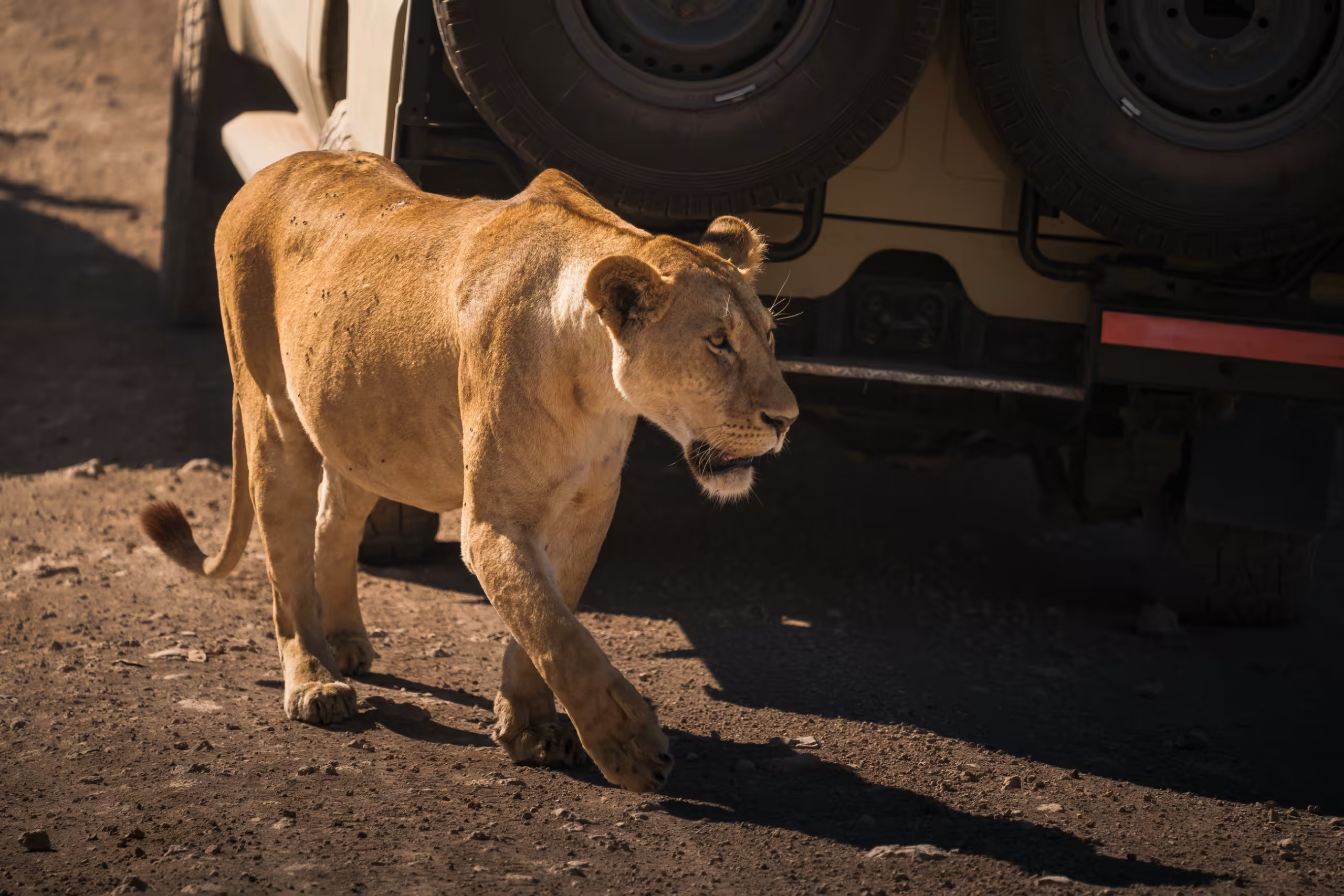
Half the mammals in the ecosystem are nocturnal, and on a normal safari you will not see any of them.
Where it is allowed
Tanzania’s national parks generally close to vehicles at sunset, so night drives happen in private concessions, in some reserves, and in community conservancies bordering the parks, where the regulations differ. It is worth checking whether a camp can offer one before you book it, because most cannot.
What comes out
- Genet and civet — cat-like, spotted, and almost never seen by day.
- White-tailed mongoose, the largest of the mongooses and strictly nocturnal.
- Bat-eared fox and, if you are very lucky, aardwolf.
- Bushbabies, which give themselves away by their eyes long before you see them.
- Nightjars sitting on the warm track, lifting at the last moment.
- Owls hunting the verges, where the spotlight brings out rodents.
And the predators
Lion and leopard hunt at night, which is the real argument for going out. What you see in the first two hours after dark is a pride getting up and organising itself, which is a different animal from the one asleep under a bush at noon.
The spotlight, and doing it decently
A red filter reduces disturbance considerably. A good guide keeps the beam off the animal’s eyes, does not hold it on a hunt in progress, and does not chase. A bad one lights up a kill and ruins it for the animals doing the work.
Practical
It is colder than you expect in an open vehicle, and photography is hard — high ISO, wide aperture and a lot of discarded frames. Take a fleece and treat it as an experience rather than a shoot.

